
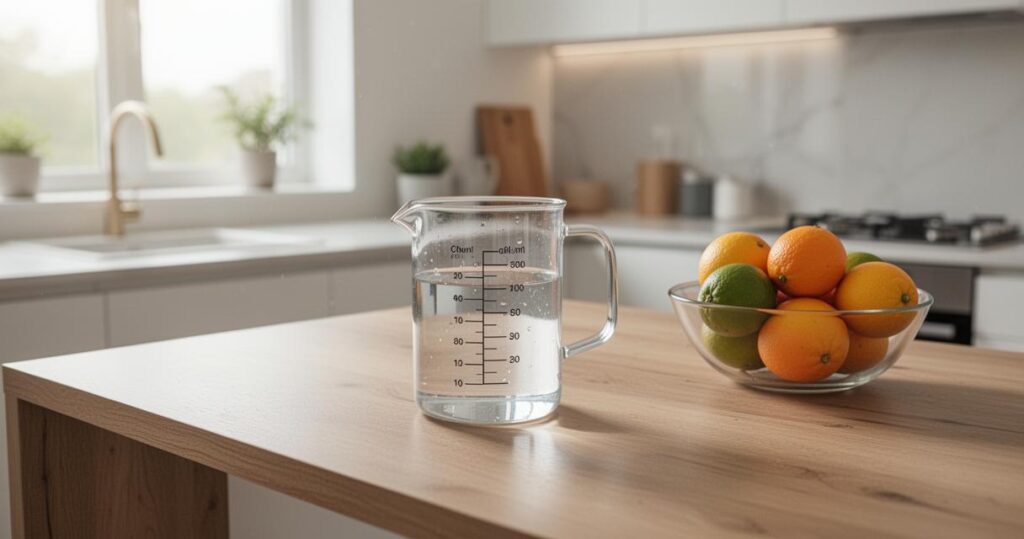
Metric measurements can feel deceptively straightforward until you actually need to convert between them in a hurry. Whether you are measuring out ingredients for a recipe or trying to make sense of a label on a bottle, understanding the relationship between centiliters, milliliters, and their fellow metric units is genuinely useful. One of the most commonly asked questions in this area is simple but important: how many milliliters are there in ten centiliters?
In short
- The metric system is organized by powers of ten, making conversions between units like centiliters and milliliters a matter of simple multiplication or division.
- To convert centiliters to milliliters, you multiply by ten, meaning that 10 centiliters are equivalent to exactly 100 milliliters.
- The prefix ‘centi’ represents one hundredth of a liter, while ‘milli’ represents one thousandth, establishing a constant ten-to-one ratio between the two units.
- Common kitchen tools provide practical volume references, such as a teaspoon equaling 5 milliliters and a standard cup holding 250 milliliters or 25 centiliters.
- A unique advantage of the metric system is the relationship between volume and weight, where one milliliter of water weighs exactly one gram and occupies one cubic centimeter.
- Understanding these metric relationships allows cooks to scale recipes accurately and work interchangeably between different notations used on packaging and in various culinary traditions.
Understanding the Basic Conversion Between Centiliters and Milliliters
The metric system is built on a beautifully logical foundation. Every unit relates to another by a power of ten, which means that once you grasp the underlying structure, converting between units becomes a matter of straightforward arithmetic rather than memorisation. When it comes to volume, the most familiar unit in everyday life is the milliliter, though centiliters and deciliters also appear regularly, particularly on packaging and in recipes across Europe.
The simple maths behind converting centiliters to milliliters
The prefix « centi » means one hundredth, so a centiliter represents one hundredth of a liter. The prefix « milli » means one thousandth, so a milliliter represents one thousandth of a liter. Because there are a thousand milliliters in a liter and a hundred centiliters in a liter, it follows that there are ten milliliters in every single centiliter. This is the core of the conversion: to convert centiliters to milliliters, you simply multiply by ten. To go in the opposite direction and convert milliliters back to centiliters, you divide by ten. The logic is consistent, clean, and easy to apply in any situation where you need to switch between these two units.
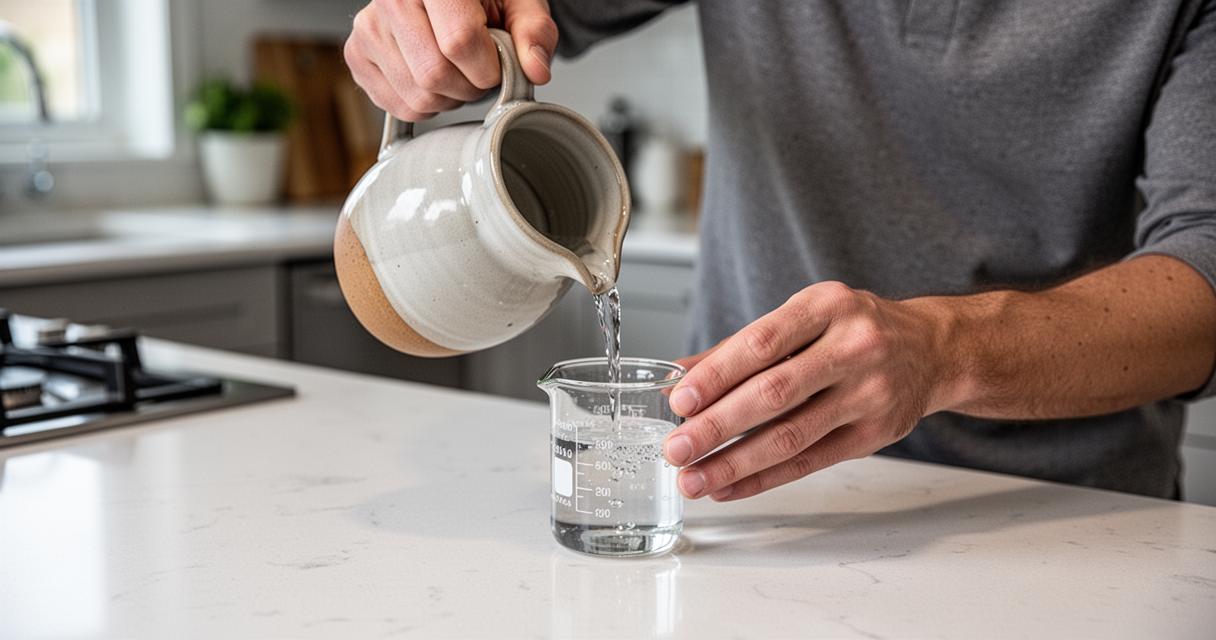
Why 10 centiliters equals exactly 100 milliliters
Returning to the central question, the answer is precise: there are exactly 100 milliliters in 10 centiliters. Since each centiliter contains 10 milliliters, multiplying by 10 gives you 100. This figure comes up frequently in cooking, drink measurements, and scientific contexts alike. A standard small glass of wine in a restaurant, for instance, is often measured in centiliters, while home cooks measuring liquid ingredients for a sauce or a batter tend to work in milliliters. Knowing that 10 cl and 100 ml are one and the same volume makes it considerably easier to follow recipes that mix the two notations, which is more common than you might expect.
Practical kitchen volume measures for everyday cooking
The kitchen is where metric conversion becomes most immediately practical. Recipes from different countries or different eras often use different systems, and even within the metric world, a French recipe might call for centiliters while a British one reaches for milliliters. Understanding both, and being able to move between them fluently, saves time and prevents costly mistakes when you are halfway through preparing a meal.
Measuring Liquids with Standard Spoons and Dessert Cups
A teaspoon holds approximately 5 milliliters, which is 0.5 centiliters. A tablespoon, by the standard metric measure, holds around 15 milliliters or 1.5 centiliters. A dessert spoon typically sits between the two at roughly 10 milliliters, which is exactly 1 centiliter. When a recipe asks for a small volume of liquid such as vanilla extract, vinegar, or a splash of coffee, these spoon-based measurements offer a practical shortcut. A standard cup measure, meanwhile, holds 250 milliliters or 25 centiliters, which is a quarter of a liter. These equivalences are worth committing to memory because they bridge the gap between informal kitchen measures and the formal metric units printed on measuring jugs and scales.
Estimating Ingredients for Soup and Coffee Recipes
For a pot of soup, a typical serving might require between 200 and 300 milliliters of stock per person, which is 20 to 30 centiliters. When brewing coffee by hand, most methods call for specific volume ratios of water to grounds, and these are almost always expressed in milliliters. Being comfortable with the conversion between centiliters and milliliters means you can scale recipes up or down without confusion, adjusting quantities proportionally regardless of which unit the original recipe uses. The same principle applies to sauces, dressings, and any liquid component where precision matters.
Converting Metric Units for Water and Dry Ingredients
Metric conversion extends well beyond liquids. Understanding how volume relates to weight, and how linear measurements such as centimeters connect to capacity units, gives a fuller picture of the metric system and makes it easier to work confidently across different types of measurement.
Comparing Water Volume to Grams and Centimeters
One of the most elegant features of the metric system is the relationship between water volume and mass. One milliliter of water weighs one gram, which means one centiliter of water weighs ten grams, and one liter of water weighs one kilogram. This makes converting between volume and weight straightforward when the substance in question is water or a liquid with a similar density. A centimeter cubed, often written as cm³, is exactly equal to one milliliter in volume. So a cube measuring one centimeter on each side holds precisely one milliliter of liquid. This geometric connection between length and volume is one of the reasons the metric system is so widely adopted in scientific and educational contexts.
Managing Flour and Other Staples by Liter and Deciliter
Dry ingredients such as flour are more commonly measured by weight than by volume in modern cooking, but volume measurements still appear in older recipes and in contexts where scales are not available. A deciliter is one tenth of a liter and equals 100 milliliters or 10 centiliters. A full liter contains 10 deciliters, 100 centiliters, or 1,000 milliliters. When working with liquids in bulk, such as liters of stock for a large batch of soup, understanding these relationships allows you to scale up efficiently. For dry ingredients, the key is remembering that volume measures are approximate because density varies: a deciliter of flour weighs considerably less than a deciliter of sugar or rice. Working with both volume and weight, and knowing how much each unit holds, makes any cooking or baking project more manageable and more precise.
The metric system rewards familiarity. Once you understand that the prefixes carry fixed mathematical meanings and that the units stack neatly by powers of ten, conversion becomes less a matter of calculation and more a matter of intuition. From the straightforward answer that 10 cl equals 100 ml, to the broader relationships between liters, deciliters, centiliters, and milliliters, these skills serve well in the kitchen, in school, and in everyday life wherever measurements are involved.