
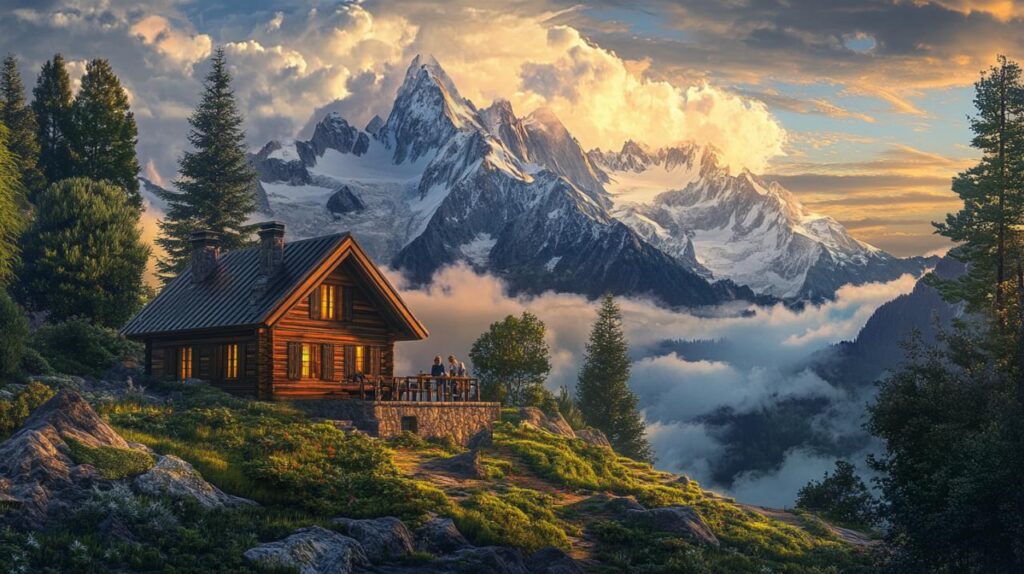
High above the valleys where nations once drew their lines in the dirt, mountain refuges stand as stubborn reminders that belonging cannot always be mapped. In the thin air where the Alps meet the sky and the Pyrenees carve their ancient paths across continents, stories of identity unfold in ways that challenge the very notion of borders. Here, among granite peaks and windswept passes, people have long sought sanctuary not just from storms, but from the rigid definitions of nationalism that insist we must belong to one place, one flag, one story. These shelters have become spaces where the stateless and the searching find a peculiar kind of home, one that exists beyond the reach of cartography and the tidy categories of territorial identity.
Sheltering Identity: Finding Home in the High Country
The mountain hut as threshold between nations
A mountain hut perched on a ridge between two countries occupies a curious position in the geography of belonging. When fog rolls in and erases the valley below, the question of which nation claims the rocky ground beneath your boots becomes almost laughable. These refuges have witnessed generations of walkers, climbers, and those fleeing one circumstance or another, all sharing the same wooden benches and the same thin soup. The very architecture of these places speaks to a kind of transnationalism born not from political theory but from necessity. Weather does not respect sovereignty, and neither does exhaustion. In such spaces, the boundaries that seemed so vital in the lowlands reveal themselves as constructs, lines on maps that mean little when survival and shelter are the only currencies that matter.
Throughout history, these high-altitude sanctuaries have played roles that official histories often overlook. During the upheavals of the last century, particularly around the time of the Second World War, mountain refuges became waypoints for those fleeing persecution, their locations known through whispered networks rather than any official cartography. The technology of border control has advanced considerably since then, with surveillance and social media now tracking movements that once went unrecorded, yet the mountains continue to offer a kind of refuge that modernity struggles to eliminate. The relationship between these shelters and the concept of displacement is profound. They stand as monuments to the idea that sometimes the most authentic form of belonging is found not in claiming a piece of earth as yours, but in sharing it with strangers who understand what it means to be between worlds.
Family Ties and Frontier Crossings in Alpine Valleys
In the valleys that wind between the great peaks of the Alps, families have lived for centuries with a dual awareness. Their lives are shaped by the mountains themselves, but also by the arbitrary division of those mountains into national territories. A grandmother in one valley might have been born under one flag, married under another, and raised her children under a third, all without leaving the same cluster of stone houses. These are the people for whom ethnic boundaries are not academic concepts but daily realities, lived in the language they speak at market and the religion they practice in their chapel. The post-colonial experience of redrawn borders, so often associated with distant continents, has its echoes here too, where former colonial powers once carved up regions with little regard for the people who called them home.
The collective memory of these communities is rich with stories of crossing and re-crossing, of smuggling not just goods but also identities. Women's rights and gender roles have shifted in these borderlands in ways distinct from the lowland cities, shaped by the particular demands of mountain life and the opportunities that frontier living has sometimes afforded. Social class, too, plays out differently when the primary division is not between rich and poor but between those who know the high passes and those who do not. Migration has always been part of the rhythm here, not just the dramatic flight of refugees but the seasonal movement of shepherds and the slow drift of families seeking better land or fleeing old feuds. These movements have created a layered identity formation, where territorial identity is less about allegiance to a distant capital and more about intimate knowledge of the landscape itself, the particular turn of a trail or the sound of a stream that tells you where you are without needing to consult a map.
Walking Between Worlds: Trails Through the Pyrenees and Beyond
Hiking routes that know no borders
The long-distance paths that traverse the Pyrenees and the Alps were not designed with geopolitics in mind. They follow the logic of the land, the ridgelines and the valleys, the places where water flows and rock allows passage. To hike these routes is to experience a kind of freedom from the usual constraints of national identity. You might begin your day in one country and end it in another without ever encountering an official checkpoint, the transition marked only by a change in the style of signposts or the language of the occasional hiker you pass. This is boundary-making of a different sort, where the boundaries that matter are those between forest and meadow, between safe ground and dangerous scree, between the known and the unknown.
For those who have experienced displacement, whether through war, economic necessity, or the slow erosion of a way of life, these trails offer a peculiar solace. They are routes that refugees have walked, sometimes in desperation, sometimes in hope. The cultural representation of these journeys in literature and film often emphasises the drama of escape, but there is also a quieter narrative about what it means to move through a landscape that refuses to be contained by the categories of nationalism. Art and cultural boundaries are tested here, as the experience of the hike becomes a shared language that transcends the usual markers of identity. The technology of modern hiking, with its GPS devices and apps, might seem to impose a new kind of order on these wild places, but the essential experience remains stubbornly resistant to codification. You are still just a body moving through space, negotiating the same challenges that walkers have faced for millennia.
National Parks as Sanctuaries for the Displaced
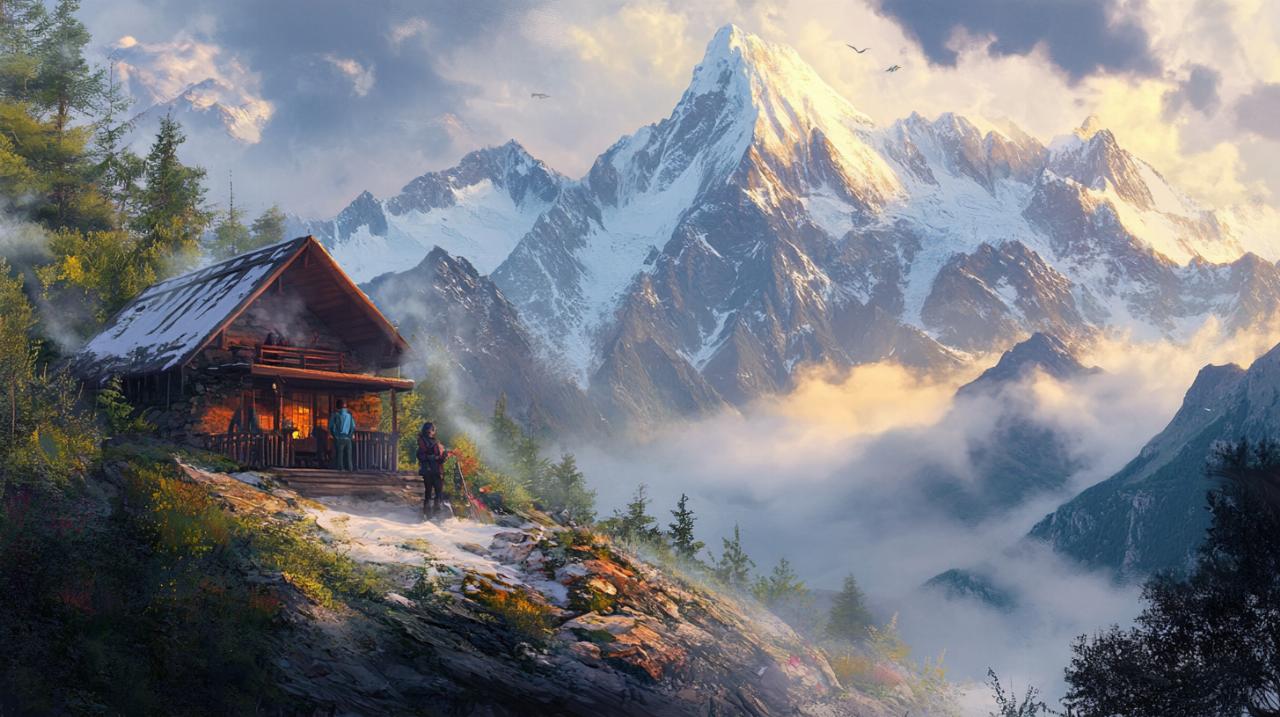
National parks, despite their name, often function as spaces that complicate rather than reinforce national identity. In regions studied through comparative nationalism, from the Baltic States to the Balkans, from the borders of China and India to the contested territories of the Caucasus, protected mountain areas have become zones where the usual rules of sovereignty are suspended in favour of conservation. This creates opportunities for those seeking refuge, whether literal or metaphorical. In places like Bosnia-Herzegovina, Georgia, and the Slovak-Hungarian borderlands, parks serve as buffers, spaces where the intensity of ethnic and territorial disputes is somewhat muted by a shared commitment to preserving the landscape.
The role of historical memory in these spaces is significant. A hike through a national park might take you past the ruins of a fortification from a long-forgotten conflict, or a memorial to those who perished in more recent violence. The land remembers even when the maps are redrawn. In countries from Germany to Greece, from Norway to Romania, the designation of a region as a park has sometimes been a way of acknowledging that certain landscapes belong not to any one nation but to a broader heritage. This is not to say that these places are free from conflict; disputes over land use, resource extraction, and tourism revenue are common. But there is also a recognition, however fragile, that some things transcend the politics of the moment. For the stateless, for those whose identity formation has been fractured by migration or historical upheaval, a mountain refuge within a national park can represent a rare point of stability, a place where the question of belonging is answered not by bureaucracy but by the simple fact of presence.
Refuge Culture: Community and Belonging at Altitude
Stories shared around the shelter stove
Inside a mountain hut as evening falls, the usual markers of social division tend to soften. The family from the city, the solo walker from abroad, the local guide, and the couple who have been hiking for months all gather around the same stove. Language barriers persist, but there is a shared understanding born of the day's exertion and the common need for warmth and food. This is where the social media-saturated world of the valleys feels very distant, and the older rhythms of storytelling and direct human contact reassert themselves. Religion might be discussed, or carefully avoided, depending on the company. Gender roles shift subtly; the person who can light the stove or read the weather is valued regardless of other attributes.
These moments of communal life in the refuge are where the abstract concepts of transnationalism and collective memory become tangible. People share stories of other mountains, other trails, other borders crossed. A refugee from one region might find common ground with a migrant worker from another, discovering that their experiences of displacement, while different in detail, share a fundamental shape. The cultural boundaries that seem so solid in the cities become permeable here. An older hiker might recount tales from the era around the Second World War, when these same huts served very different purposes. A younger person might speak of contemporary struggles, of the ways that modern forms of nationalism are reshaping their homeland. The conversation might touch on everything from the politics of the Canary Islands to the situation in Myanmar, from the legacy of colonial powers in Africa to the territorial disputes in Taiwan and Cyprus. What unites these disparate narratives is the recognition that borders, while real in their consequences, are also contingent, the products of specific historical moments and power relations.
Reclaiming rootedness through mountain landscapes
For many who feel unmoored by the currents of modern life, the mountains offer a way to reclaim a sense of rootedness that is not dependent on national identity or ethnic boundaries. This is particularly true for those whose families have experienced migration across multiple generations, who carry within them the cultural inheritance of several places without fully belonging to any. The act of returning to the mountains, whether the Alps, the Pyrenees, or ranges in Albania, Spain, Italy, Turkey, Japan, or Mexico, becomes a way of anchoring oneself in something older and more enduring than the nation-state. The landscape itself becomes a kind of family, a set of relationships and stories that one can claim regardless of what any official document might say.
This form of belonging is not without its complications. Regional studies scholars have noted that the romanticisation of mountain life can obscure the real hardships faced by those who live there year-round, and the ways that tourism and conservation policies can displace local communities even as they celebrate the landscape. Yet there is also something genuinely radical about the way mountain refuges challenge conventional ideas about identity formation. They suggest that it is possible to belong to a place, and to a community, without needing to define that belonging in opposition to others. The cultural representation of mountains in art, literature, and film often emphasises their role as places of solitude and individual challenge, but the reality of refuge culture is that it is deeply communal. It is about the shared meal, the shared risk, the shared joy of reaching a summit or surviving a storm. In this sense, the refuge is a model for a different kind of society, one where the boundaries that matter are those we choose to cross together rather than those we use to keep each other out.