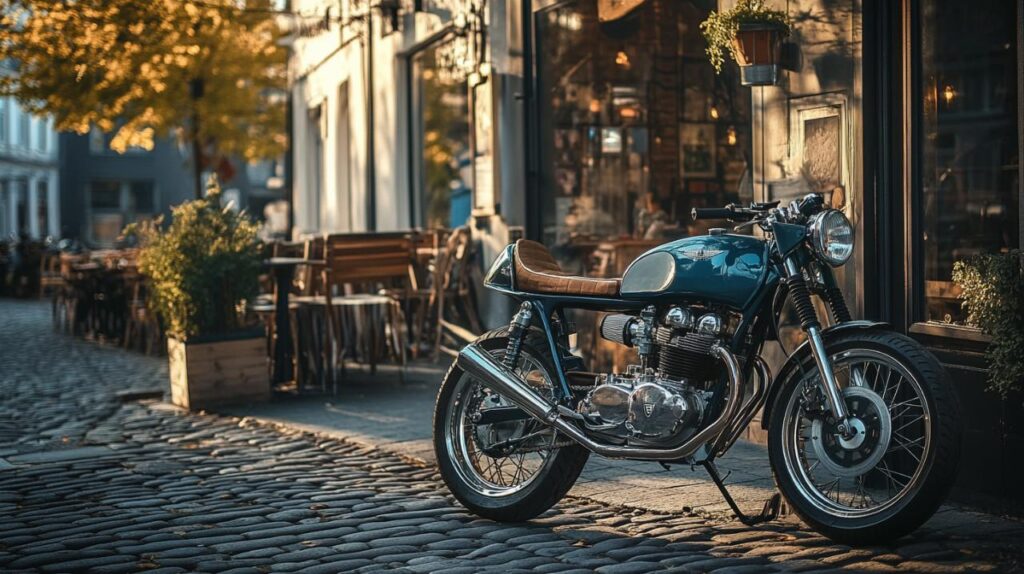
The allure of the cafe racer extends far beyond its mechanical prowess, residing equally in its visual identity. These motorcycles, born from the vibrant British youth culture of the 1950s and 1960s, embody a philosophy where form and function converge seamlessly. Crafting the perfect aesthetic for a cafe racer involves a delicate balance between honouring historical roots and expressing individual creativity. The choices made in colour schemes and design features determine whether a build resonates as an authentic nod to the past or ventures boldly into contemporary custom territory.
Classic colour schemes that define the cafe racer look
The visual language of the cafe racer remains deeply rooted in the traditions of British motorcycling heritage. When enthusiasts gathered outside roadside cafes, racing from one jukebox tune to the next, their machines often wore colours that reflected both national pride and practical considerations. The palette of these early machines was deliberately restrained, favouring hues that complemented the raw engineering on display whilst maintaining a purposeful, no-nonsense character. Understanding these foundational colour choices provides the essential groundwork for any build seeking to capture the spirit of the movement.
Traditional british racing green and black combinations
British Racing Green stands as perhaps the most iconic colour associated with cafe racers, evoking images of speed trials and circuit racing that defined an era. This deep, rich green carries with it a legacy of competitive spirit, having adorned countless racing machines that tore through the streets and circuits of post-war Britain. When paired with black panels, the combination creates a visual depth that highlights the mechanical elements whilst maintaining a unified aesthetic. The contrast between these two colours serves a practical purpose beyond mere appearance, as the darker tones help disguise the inevitable road grime that accumulates during spirited riding. Many builders favour this pairing for fuel tanks and mudguards, allowing the engine and chassis components to remain visible and celebrated rather than hidden beneath excessive bodywork. The glossy finish typically applied to British Racing Green catches light in ways that emphasise the curves of a tank or the sleek profile of a custom seat cowl, creating visual interest without resorting to complex graphics. Black sections, whether in matte or gloss finishes, provide grounding points that anchor the eye and prevent the overall design from becoming visually overwhelming. This combination remains timelessly elegant, never falling victim to the shifting trends that date other colour choices. For those building a machine intended to honour the original cafe racer ethos, this pairing represents a safe yet sophisticated foundation upon which other design elements can build.
Chrome Accents and Bare Metal Finishes for Authentic Appeal
The strategic use of chrome and exposed metal surfaces distinguishes a thoughtfully executed cafe racer from a merely painted motorcycle. Early builders stripped unnecessary components not only to reduce weight but also to reveal the mechanical beauty beneath the bodywork. Chrome plating on elements such as fork tubes, exhaust headers, and wheel rims serves both aesthetic and protective functions, providing corrosion resistance whilst adding reflective surfaces that catch light dynamically. The decision to leave certain components in bare polished aluminium or stainless steel creates visual texture that breaks up large painted areas and draws attention to the craftsmanship involved in the build. Engine cases left unpainted or polished to a mirror finish celebrate the engineering that powers the machine, transforming functional components into focal points. This approach requires careful consideration of which elements to highlight, as excessive chrome can veer into territory more appropriate for cruiser styling rather than the purposeful minimalism of a proper cafe racer. The frame itself often receives attention, with some builders choosing to powder coat in black or grey tones whilst others strip and polish, revealing the underlying steel or aluminium construction. Fasteners, brackets, and mounting hardware benefit from thoughtful treatment as well, with stainless steel or black oxide finishes maintaining visual cohesion. The interplay between painted surfaces, chrome accents, and bare metal creates a layered visual experience that rewards closer inspection whilst maintaining a coherent overall impression from a distance. This careful balance between concealment and revelation defines much of what makes a cafe racer aesthetically compelling.
Essential design features for your cafe racer build
Beyond colour choices, the physical components selected for a cafe racer build fundamentally define its character and authenticity. These design features emerged from the practical demands of riders seeking improved performance within budget constraints, leading to a distinctive silhouette recognised globally. Modern builders benefit from decades of refinement and an expansive aftermarket parts industry, yet the core principles remain unchanged. Each component serves a purpose beyond aesthetics, contributing to the handling characteristics, rider ergonomics, and overall performance envelope of the finished machine.
Selecting the Proper Tank Shape and Seat Configuration
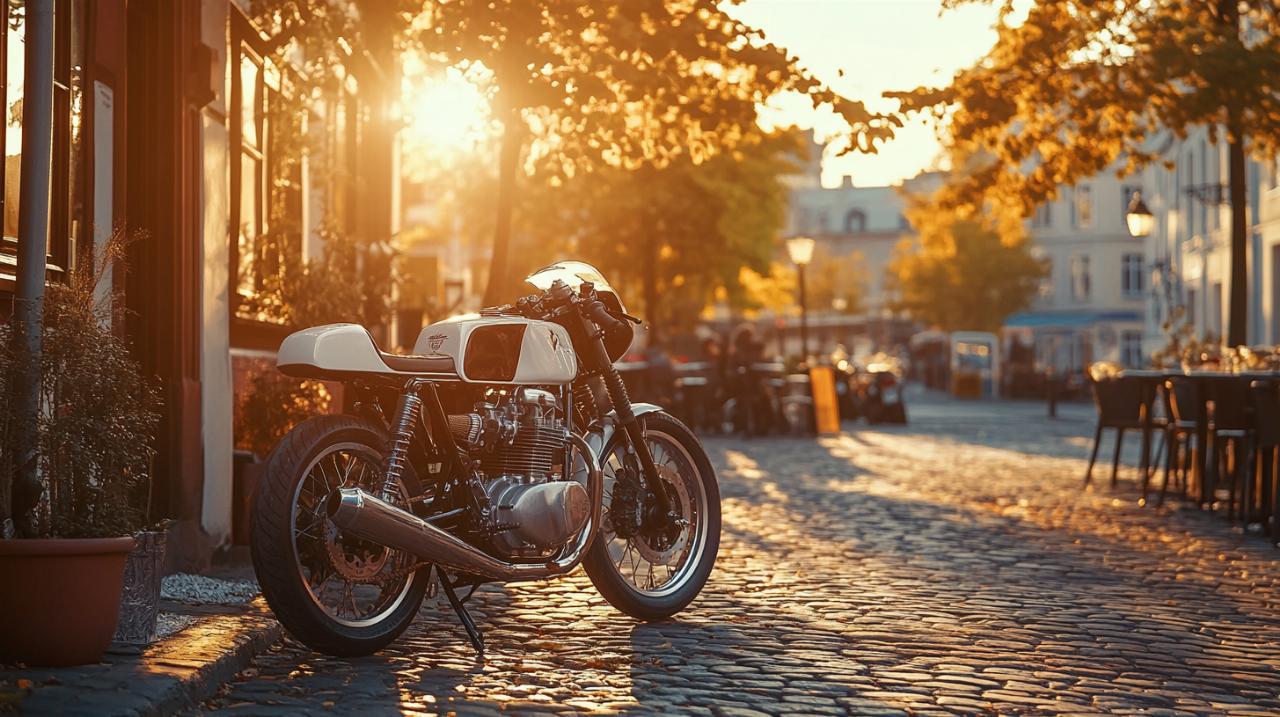
The fuel tank represents perhaps the most visually prominent component on any motorcycle, and cafe racer builds demand particular attention to this element. Traditional designs favour slim, elongated profiles with pronounced knee indents that allow riders to grip the machine securely during aggressive cornering. Clip-on handlebars naturally push riders forward into a more aerodynamic position, and the tank shape must accommodate this altered riding posture without creating uncomfortable pressure points. Vintage British tanks from manufacturers such as Triumph or BSA provide authentic proportions that immediately signal cafe racer intent, whilst replica units offer similar styling with modern construction techniques and fuel system compatibility. The relationship between tank and seat cannot be overlooked, as these components must flow seamlessly to create the characteristic wedge profile that defines the breed. Single seats, often terminating in a raised section known as a bum stop or cowl, eliminate pillion accommodation in favour of streamlined aesthetics. This configuration reinforces the cafe racer ethos of solitary, focused riding rather than leisurely touring. The seat itself should position the rider in a manner that complements the forward-leaning stance encouraged by lower handlebars and rear-set footpegs, creating a cohesive ergonomic package. Upholstery choices range from diamond-stitched leather that evokes vintage craftsmanship to modern materials offering improved weather resistance and durability. Some builders incorporate gel inserts beneath the cover to improve comfort during longer rides, acknowledging that style need not preclude practicality entirely. The junction between seat and tank receives particular scrutiny, as gaps or misalignment immediately betray a lack of attention to detail that undermines an otherwise successful build.
Choosing between clip-on bars and clubman handlebars
The handlebar selection fundamentally alters both the visual profile and riding experience of a cafe racer, making this decision among the most consequential in any build. Clip-on handlebars mount directly to the fork tubes below the top triple clamp, creating the lowest possible hand position and the most aggressive riding stance. This configuration dominated racing applications where aerodynamic advantage outweighed comfort considerations, and early cafe racer builders adopted the style to emulate their racing heroes. The dramatic forward lean required by clip-ons places significant weight on the wrists and demands core strength to maintain over extended periods, making them less suitable for riders seeking a machine for daily commuting or long-distance travel. Clubman bars offer a compromise position, mounting to the top clamp in conventional fashion but sweeping downward and back to create a lower grip point than standard bars whilst remaining more forgiving than true clip-ons. This style takes its name from the clubman racing class where such bars were common, providing a period-correct appearance with improved ergonomics. The choice between these options depends upon intended use patterns and physical considerations unique to each builder. Younger riders or those with greater flexibility may tolerate clip-ons without issue, whilst others find the position untenable after brief periods. Bar width also influences handling characteristics, with narrower bars quickening steering response at the cost of leverage for low-speed manoeuvring. Modern cafe racer interpretations increasingly favour clubman bars as they offer the essential visual cues without compromising usability to the degree that clip-ons demand. Whichever option receives selection, the bars must coordinate with brake and clutch lever angles, control placement, and cable routing to maintain clean lines and functional operation. Poorly executed handlebar installations reveal themselves through awkward cable loops or stretched lines that spoil the minimalist aesthetic central to successful cafe racer design.
Modern interpretations and custom paint schemes
Whilst respecting traditional aesthetics remains important, contemporary cafe racer culture increasingly embraces personalisation and creative expression that extends beyond historical precedent. Modern paint technology, improved customisation techniques, and evolving tastes have expanded the visual vocabulary available to builders without abandoning the core principles that define the style. This evolution ensures the cafe racer aesthetic remains relevant and appealing to new generations of enthusiasts rather than calcifying into mere historical reproduction. The challenge lies in incorporating fresh ideas whilst maintaining the essential character that distinguishes a cafe racer from other custom motorcycle genres.
Contemporary colour trends whilst maintaining heritage
Recent years have witnessed cafe racer builds incorporating colour palettes that would have seemed unconventional during the style's original heyday. Matte finishes in shades such as military green, gunmetal grey, and even muted earth tones provide modern alternatives to traditional glossy paints whilst maintaining visual restraint appropriate to the genre. These contemporary choices often reference industrial or military aesthetics rather than racing heritage, appealing to builders seeking to distinguish their machines from the countless black and green examples populating motorcycle gatherings. The key to successful implementation lies in maintaining the essential simplicity that defines cafe racer styling, avoiding the temptation to introduce multiple competing colours that fragment visual cohesion. Some builders adopt two-tone schemes that divide the tank horizontally or incorporate subtle colour transitions that add interest without overwhelming the eye. Metallic and pearlescent finishes offer depth and complexity that changes with viewing angle and lighting conditions, creating dynamic visual experiences from static paint. The durability advantages of modern automotive paints and application techniques mean that even elaborate schemes can withstand the rigours of regular use that would have quickly degraded earlier finishing methods. Contemporary builds frequently incorporate colour-matched components beyond the traditional tank and mudguards, extending the chosen palette to items such as fork lowers, suspension components, and even engine covers. This comprehensive approach creates a more unified appearance that emphasises the cafe racer as a complete design statement rather than a standard motorcycle with a few swapped parts. The integration of modern safety technology, including LED lighting systems, presents opportunities to incorporate lighting design as a colour element, with amber or smoked lenses complementing overall colour schemes in ways that traditional bulb technology could not achieve.
Bespoke graphics and pinstriping techniques
The addition of graphics and decorative elements represents the final layer of personalisation that transforms a competent build into a distinctive individual statement. Traditional pinstriping, applied by hand in contrasting colours, adds visual refinement that references coachbuilding traditions predating the motorcycle itself. These fine lines typically follow body contours, emphasising curves and creating visual flow that guides the eye across the machine's surfaces. Skilled pinstripers can incorporate subtle flourishes and details that reward close examination without overwhelming the overall design from a distance. The placement of racing numbers, whether authentic competition digits or purely decorative choices, immediately signals cafe racer intent and provides opportunities for personal significance through number selection. Some builders incorporate sponsor-style logos or vintage petroleum company graphics that evoke the commercial partnerships common in period racing, lending authenticity even to machines that never competed. Custom tank badges, whether fabricated specifically for a build or adapted from other applications, serve as focal points that anchor the visual design and provide branding opportunities for professional builders establishing their reputation. The advent of vinyl graphics and digital printing has democratised access to complex designs previously requiring expensive hand-painting or airbrush work, though the visual texture and permanence of these modern techniques differs noticeably from traditional methods. Thoughtful builders use graphics sparingly, recognising that restraint often produces more powerful visual results than elaborate decoration. The cafe racer aesthetic fundamentally celebrates the motorcycle itself rather than using it as a canvas for unrelated artwork, suggesting that any graphics incorporated should enhance rather than obscure the underlying form. Modern interpretations sometimes incorporate geometric patterns or abstract elements that reference contemporary design movements whilst maintaining the clean lines essential to the style. Successfully executed graphics and pinstriping demonstrate the builder's attention to detail and commitment to creating a finished product that transcends mere mechanical assembly, elevating the cafe racer into the realm of rolling sculpture that honours both past and present.